Cost-Effective Development soil management
Management of “development soil,” commonly encountered in downtowns and village centers across Vermont, can place a significant burden on communities and developers undertaking infrastructure or revitalization projects. Development soil contains concentrations of polycyclic aromatic hydrocarbons (PAHs), arsenic, or lead that exceed Vermont Soil Standards for urban background conditions. Historically, project owners either assumed long‑term liability associated with contaminated soil management or incurred high costs to transport soil to an off‑site landfill for disposal.
Since 2015, the State of Vermont has taken steps to reduce this burden by expanding options for managing development soil. Through Act 52 (10 V.S.A. § 6604c), the state established two additional pathways for managing, transporting, and disposing of excavated development soil beyond on‑site management or disposal at a solid waste landfill. These options include transfer of soil to a categorical solid waste facility permitted to accept development soil for disposal, or reuse at an approved receiving site with contaminant concentrations similar to or greater than those at the source site. Although no categorical facilities are currently permitted to accept development soil, Stone is actively working with potential facilities to support future permitting.
Stone helps property owners, municipalities, and developers identify practical, cost‑effective solutions for managing development soils in compliance with Vermont regulations. Our team of scientists and engineers supports evaluation of on‑site soil management and treatment strategies, as well as lower‑cost off‑site disposal options at categorical facilities or approved receiving sites, consistent with Vermont’s Investigation and Remediation of Contaminated Properties Rule (IRule).
Development Soils Management Support Services
Soil Management Plans (SMP) and Corrective Action Plans (CAP)
A well-thought-out SMP or CAP can provide assurance and clear direction to contractors and project owners during construction. When approved by the Vermont Department of Environmental Conservation (VT DEC), designation of soil as development soil within a SMP or CAP allows permitted disposal facilities to approve soil for use as daily cover. This process is typically faster and more streamlined than review through the Vermont Solid Waste Division. Stone routinely develops CAPs and SMPs to support redevelopment and infrastructure improvement projects statewide.
On-site Management and Treatment
Our engineers work closely with developers to design and implement on‑site soil management solutions, including engineered barriers and institutional controls incorporated into grading and site design plans. Where feasible, Stone integrates soil management strategies into redevelopment designs to minimize off‑site transport, such as balancing cut and fill volumes to reduce disposal needs.
Categorical Disposal Facility Permitting
Permitting categorical facilities to accept development soil presents an opportunity for substantial cost savings for developers and municipalities. Several Vermont facilities already accept inert solid waste such as stumps, clean fill, and construction and demolition debris. With permit amendments through the VT DEC Solid Waste Management and Prevention Division, these facilities may also accept development soil. Stone is actively working with multiple categorical facilities that are interested in pursuing permitting to accept development soil at costs lower than landfill disposal.
Transport and Disposal at a Receiving Site
Stone supports developers and municipalities through the full approval process for receiving sites, including site characterization and development of conceptual site models, waste characterization through soil sampling and SPLP testing plans, regulatory coordination, public outreach, reporting, and preparation and implementation of management plans.
-
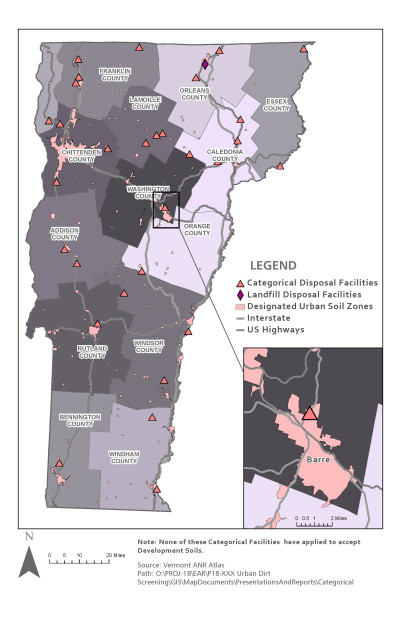
There are categorical solid waste facility permitted in Vermont to receive inert waste. With a permit amendment, these facilities would be eligble to also receive development soils.
-
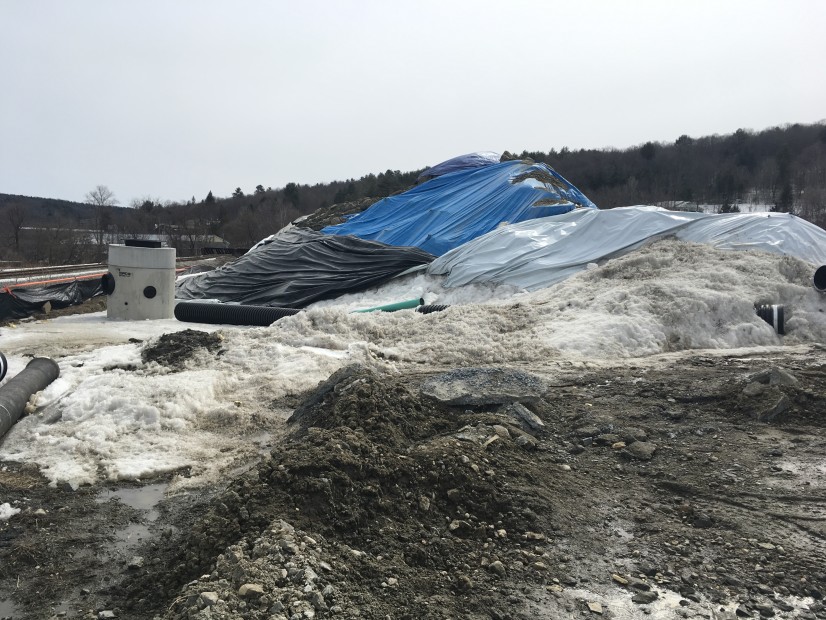
For the Caledonia Spirits Brownfield Redevelopment project, development soils in stockpile were repurposed to grade an overflow parking lot so no soils required off-site disposal.
-
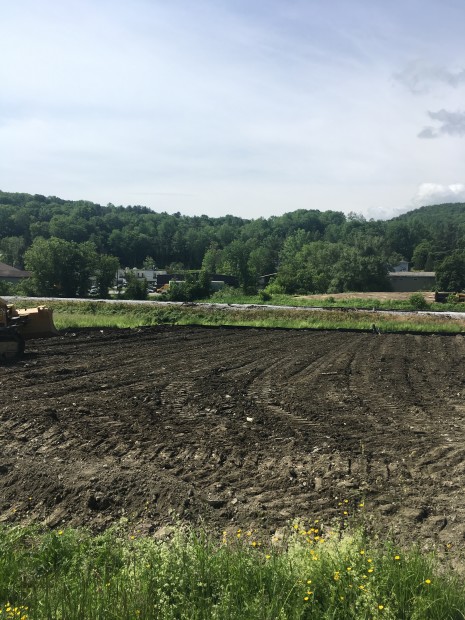
For the Caledonia Spirits Brownfield Redevelopment project, development soils in stockpile were repurposed to grade an overflow parking lot so no soils required off-site disposal.
-
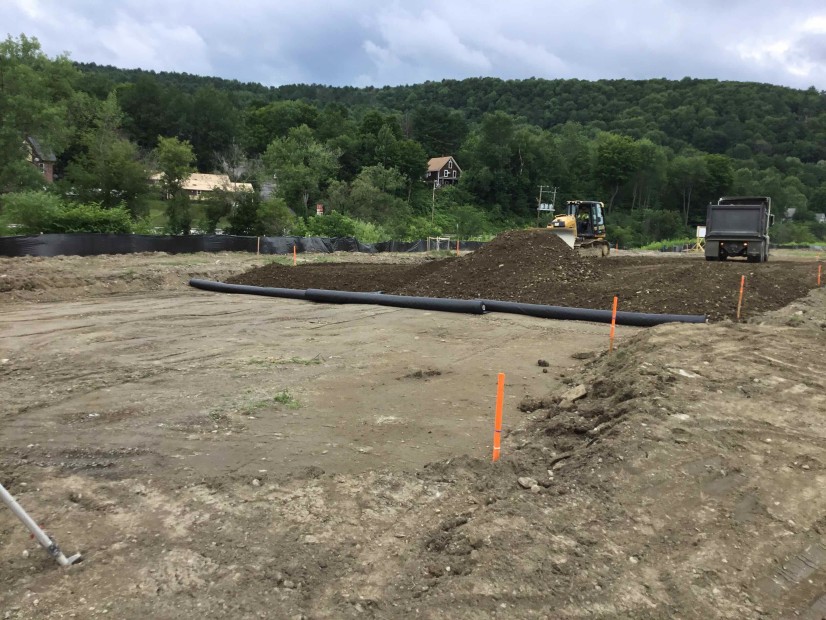
Engineered barriers were also designed to complement civil and architectural designs for the redevelopment project and utilized planned site features including the distillery building, asphalt parking lot, concrete sidewalks, and green spaces with indicator fabric demarcating contaminated soils from clean subgrade and topsoil.